T01: Enhancing reliability and efficiency of computer based tasks
Half Day Tutorial
Gregory Bedny (short bio)
Ergologic, Inc.
3 Nuthatcher Court, Wayne, NJ 07470
gbedny@optonline.net
Waldemar Karwowski (short bio)
University of Central Florida
Orlando, FL, USA
wkar@mail.ucf.edu
Inna Bedny (short bio)
Ergologic, Inc.
3 Nuthatcher Court, Wayne, NJ 07470
Abstract:
In this workshop SSAT will be discussed as a conceptual approach to study computer based tasks and their reliability assessment. The workshop will consist of presentations, discussion and small group exercises.
Objectives:
Workshop introduces basic principles and concepts of SSAT that are necessary for reliability analysis. Such concepts as human algorithm, deterministic and probabilistic algorithm will be introduced. Basic principle of algorithmic description of human performance for reliability assessment will be considered. Workshop will give participants general knowledge for quantitative assessment of failures and errors in performance of HCI tasks. The main purpose of this workshop is to familiarize participants with methods that can be used in the study of reliability of human performance in HCI.
Content and Benefits:
There are a number of books and articles that cover a range of techniques utilized for human reliability assessment. However, there has been no attempted made to assess the human performance reliability when a user interact with computer. In this workshop we will demonstrate the first attempt on using systemic-structural activity theory for this purpose. Relationship between errors and failures, precision and reliability will be considered. We’ll also discuss relationship between qualitative and quantitative methods. Failure and errors reduction methods will be considered. Stages of analysis during reliability assessment will be described. Participants will practice discussed above methods performing a number of exercises. By applying these methods to a series of examples, participants will get hands on experience using SSAT in HCI reliability assessment and failure reduction methods
Target Audience:
Researchers, usability engineers, ergonomists and psychologists will find this workshop useful.
Relevant links:
- Human-Computer Interaction and Operators' Performance: Optimizing Work Design with Activity Theory
- A Method of Human Reliability Assessment Based on Systemic-Structural Activity Theory
Biographies
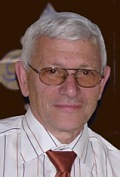

Dr. Waldemar Karwowski is Professor and Chairman of the Department of Industrial Engineering & Management Systems and Director of the Center for Industrial Ergonomics at the University of Central Florida, Orlando, FL, USA. His research, teaching and consulting activities focus on human system integration and safety aspects of advanced manufacturing enterprises, human-computer interaction, prevention of work-related musculoskeletal disorders, workplace and equipment design, and theoretical aspects of ergonomics science. Dr. Karowowski is the author or co-author of over 300 scientific publications in the areas of work systems design, organization and management: macroergonomics, human-system integration and safety of advanced manufacturing, industrial ergonomics, neuro-fuzzy modeling in human factors, fuzzy systems, and forensics. He has edited or co-edited 35 books, including the "International Encyclopedia of Ergonomics and Human Factors". Dr. Karwowski serves as editor or co-editor of the "Human Factors and Ergonomics in Manufacturing", "Theoretical Issue in ergonomics Science", "International Journal of Occupational Safety and Ergonomics", "Consulting Editor of the Ergonomics".
Past President of the International Ergonomics Association (IEA)
Past President of the Human Factors and Ergonomics Society (HFES)
Past Director, Board of Certification in Professional Ergonomics (BCPE)
Dr. Karwowski holds an M.S. (1978) in Production Engineering and Management from the Technical University of Wroclaw, Poland, and a Ph.D. (1982) in Industrial Engineering from Texas Tech University. Recently, he was awarded the Sc.D. (dr hab.) degree in Management Science, by the Institute for Organization and Management in Industry (ORGMASZ), Warsaw Poland (June 2004). He is also a Board Certified Professional Ergonomist (BCPE).